War photography is an editorial entry to follow Parisian exhibitions based on a theme rather than a single museum or date. It helps link pathways that are sometimes scattered around reporting, testimony, propaganda, collective memory, and the ethics of seeing. This approach is useful when a visit begins with a precise curiosity, a social question, a technique, a visual period, or an image that one wants to better understand. On Expo Paris, this subject serves to compare exhibitions that share the same cultural field. It allows identifying the institutions working on this vocabulary, the artists often associated, the objects to observe, and the scenographic choices that give meaning. The page is not just a list: it provides a reading framework before choosing an exhibition, and a thread to extend the visit afterwards. To prepare a visit, one must look at how each exhibition transforms the subject into a concrete experience. Some insist on archives, others on matter, the image, the gesture, the march, memory, or social context. War photography then becomes a practical tool to move from a poster to a real cultural itinerary, with links to the exhibitions, places, and other art history references present in the catalogue. This classification also strengthens the site's internal network. It brings current exhibitions closer to the movements, periods, artists, and places that illuminate them, while leaving the visitor with a simple reading. The goal is to make the choice faster, but also richer: understanding why an exhibition matters, with which other events it dialogues, and what question it allows one to take away from the museum.
War photography
War photography gathers the Parisian exhibitions that illuminate reporting, testimony, propaganda, collective memory, and the ethics of seeing.
Why this topic matters
Useful background to understand this subject and the linked exhibitions.
How to use this page
A practical reading of the subject through artists, movements and periods already linked across the site.
War photography is useful on Expo Paris because it groups exhibitions that approach the same question from different media, venues and periods. 4 linked exhibitions already give this page a concrete editorial role in the English navigation.
Artists such as Chana Orloff, Martin Parr, and Robert Capa help turn the subject into something concrete rather than purely thematic. Movements like Conceptual Art and Modern art show how the topic changes tone across styles and periods. Periods such as 20th century and 1970s–1980s make it easier to see how the same subject returns in very different historical settings.
Core reading anchors
Direct links to the movements, artists and periods that structure this subject in English.
- Conceptual Art - 2 exhibitions
- Modern art - 1 exhibition
- Chana Orloff - 1 exhibition
- Martin Parr - 1 exhibition
- Robert Capa - 1 exhibition
- 20th century - 3 exhibitions
- 1970s–1980s - 1 exhibition
- Henri Cartier Bresson
- Lee Miller
- Browse exhibitions
Core editorial routes
Stable English routes that keep this subject connected to the main discovery structure of the site.
These routes provide a dependable editorial mesh in English so the subject page stays useful even when narrower related pages are still being expanded.
Linked exhibitions
Exhibitions already available through this subject page.

Chana Orloff: War and Peace
is currently on view at Ateliers-musée Chana Orloff.
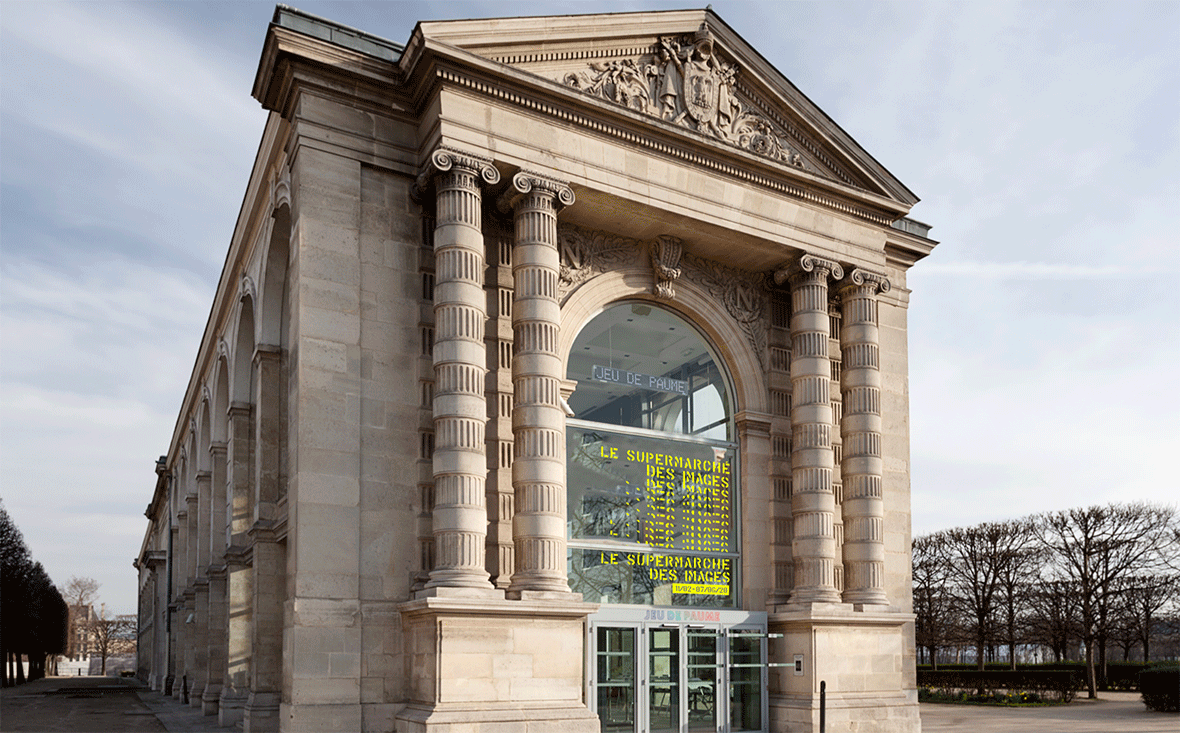
Jo Ractliffe: Beside the Point
is currently on view at Jeu de Paume.
Martin Parr: Global Alert
is currently on view at Jeu de Paume.

Robert Capa: War Photographer
is currently on view at Musée de la Libération de Paris - musée du Général Leclerc - musée Jean Moulin.
Explore this topic
Other contextual pages already connected to this subject.