Mummies
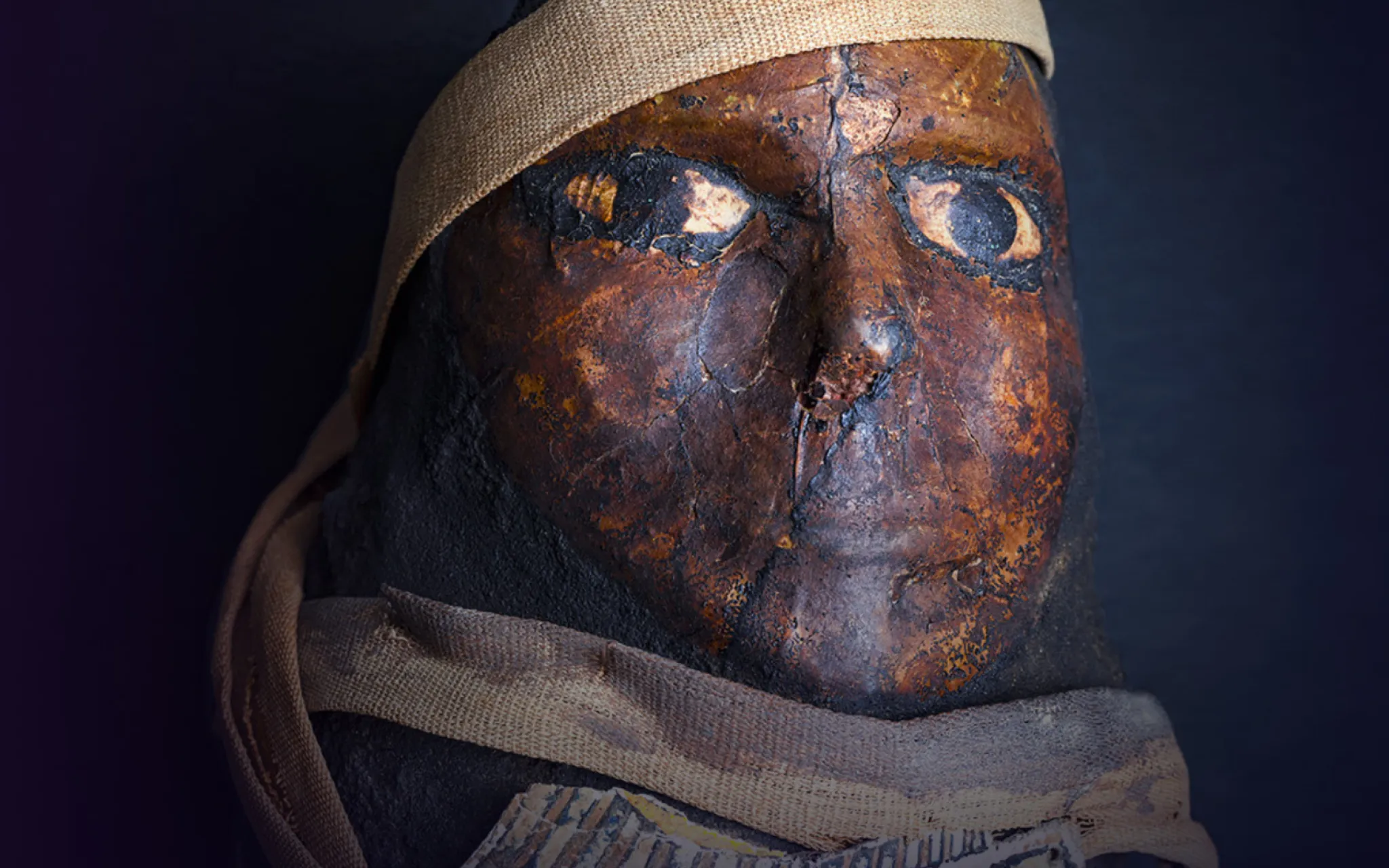
Mummies invites visitors to meet individuals intentionally mummified in South America, Egypt, France, or elsewhere. The tour combines human remains, mediation devices, and scientific inquiries to showcase the diversity of mummification practices and question the ethical, heritage, and symbolic issues linked to their s...

The exhibition
Visit description
Mummies invites visitors to meet individuals intentionally mummified in South America, Egypt, France, or elsewhere. The tour combines human remains, mediation devices, and scientific inquiries to showcase the diversity of mummification practices and question the ethical, heritage, and symbolic issues linked to their s. Mummies invites visitors to meet individuals intentionally mummified in South America, Egypt, France, or elsewhere.
What to look for
Momies opens up a broad perspective on mummification, ranging from the history of practices, science of the body, to contemporary questioning on the conservation of human remains. The highlight lies in the way the exhibition crosses emotion, anthropology, and ethical reflection, without limiting itself to the spectacular or solely to fascination for the preserved bodies.
Practical reading
Mummies is listed with its main venue, date and booking signals so the page can support planning as well as editorial browsing.
Overview
Mummies invites visitors to meet individuals intentionally mummified in South America, Egypt, France, or elsewhere. The tour combines human remains, mediation devices, and scientific inquiries to showcase the diversity of mummification practices and question the ethical, heritage, and symbolic issues linked to their s...
Momies opens up a broad perspective on mummification, ranging from the history of practices, science of the body, to contemporary questioning on the conservation of human remains.
On Expo Paris, Mummies is most useful when it is read not only as a single event but as part of a broader route through Musée de l'Homme, where exhibitions, artists and editorial themes can be compared quickly in English. This page becomes easier to place when it is connected to the strongest editorial routes already available on the site.
For an English reader, the point of this page is also practical: it clarifies the venue, dates and booking context, then opens clear paths toward related exhibitions, artists and subjects so that the visit does not remain isolated. 3 related exhibition pages are already close enough to help compare tone, period or venue.
Why go
Momies opens up a broad perspective on mummification, ranging from the history of practices, science of the body, to contemporary questioning on the conservation of human remains.
The highlight lies in the way the exhibition crosses emotion, anthropology, and ethical reflection, without limiting itself to the spectacular or solely to fascination for the preserved bodies.
The exhibition shifts the gaze: the mummy no longer appears as an exotic or spectacular figure, but as a human, ritual, and scientific testament inscribed within multiple histories.
Related exhibitions

The Great Ages
is currently on view at Musée de l'Homme.
Drugs at the Musée de l'Homme
is currently on view at Musée de l'Homme.

A Wardrobe of One's Own. Dissident Femininities in the 19th Century
is currently on view at Palais Galliera.