Back Machine #3: Autochrome
Starting December 1, 2026, the Cité des sciences et de l'industrie closes its Back Machine series with a third installment dedicated to Autochrome, the first industrial color photography process. Designed by the Lumière brothers and commercialized as early as 1907, this process relies on a glass plate covered with mi...
The exhibition
Visit description
Starting December 1, 2026, the Cité des sciences et de l'industrie closes its Back Machine series with a third installment dedicated to Autochrome, the first industrial color photography process. Designed by the Lumière brothers and commercialized as early as 1907, this process relies on a glass plate covered with mi. Starting December 1, 2026, the Cité des sciences et de l'industrie closes its Back Machine series with a third installment dedicated to Autochrome, the first industrial color photography process.
What to look for
Because it is the rare opportunity to examine up close a foundational yet lesser-known technique: autochrome, the color process patented by the Lumière brothers, explained step by step rather than skimmed. The intersection with the gaze of Marc Ferrez and the. Three highlights structure the visit: the concrete demonstration of the Lumière brothers' Autochrome process, supported by the glass plate and potato starch; the sound immersion designed with Radio France Studios, which.
Practical reading
Back Machine #3: Autochrome is listed with its main venue, date and booking signals so the page can support planning as well as editorial browsing.
Overview
Starting December 1, 2026, the Cité des sciences et de l'industrie closes its Back Machine series with a third installment dedicated to Autochrome, the first industrial color photography process. Designed by the Lumière brothers and commercialized as early as 1907, this process relies on a glass plate covered with mi...
From December 1st, 2026 to October 2027, the Cité des sciences dedicates the third installment of its Machine arrière series to autochrome, the first color photographic process of the Lumière brothers. With photographer...
On Expo Paris, Back Machine #3: Autochrome is most useful when it is read not only as a single event but as part of a broader route through Cite des Sciences et de l'Industrie, where exhibitions, artists and editorial themes can be compared quickly in English. This page becomes easier to place when it is connected to the strongest editorial routes already available on the site.
For an English reader, the point of this page is also practical: it clarifies the venue, dates and booking context, then opens clear paths toward related exhibitions, artists and subjects so that the visit does not remain isolated. 3 related exhibition pages are already close enough to help compare tone, period or venue.
Why go
Because it is the rare opportunity to examine up close a foundational yet lesser-known technique: autochrome, the color process patented by the Lumière brothers, explained step by step rather than skimmed. The intersection with the gaze of Marc Ferrez and the...
Three highlights structure the visit: the concrete demonstration of the Lumière brothers' Autochrome process, supported by the glass plate and potato starch; the sound immersion designed with Radio France Studios, which...
The angle is not color photography in general, but a precise and forgotten object: the Autochrome plate. Back Machine takes sides in rewinding the history of techniques from a single gesture — dyeing the potato starch to capture color —...
Related exhibitions
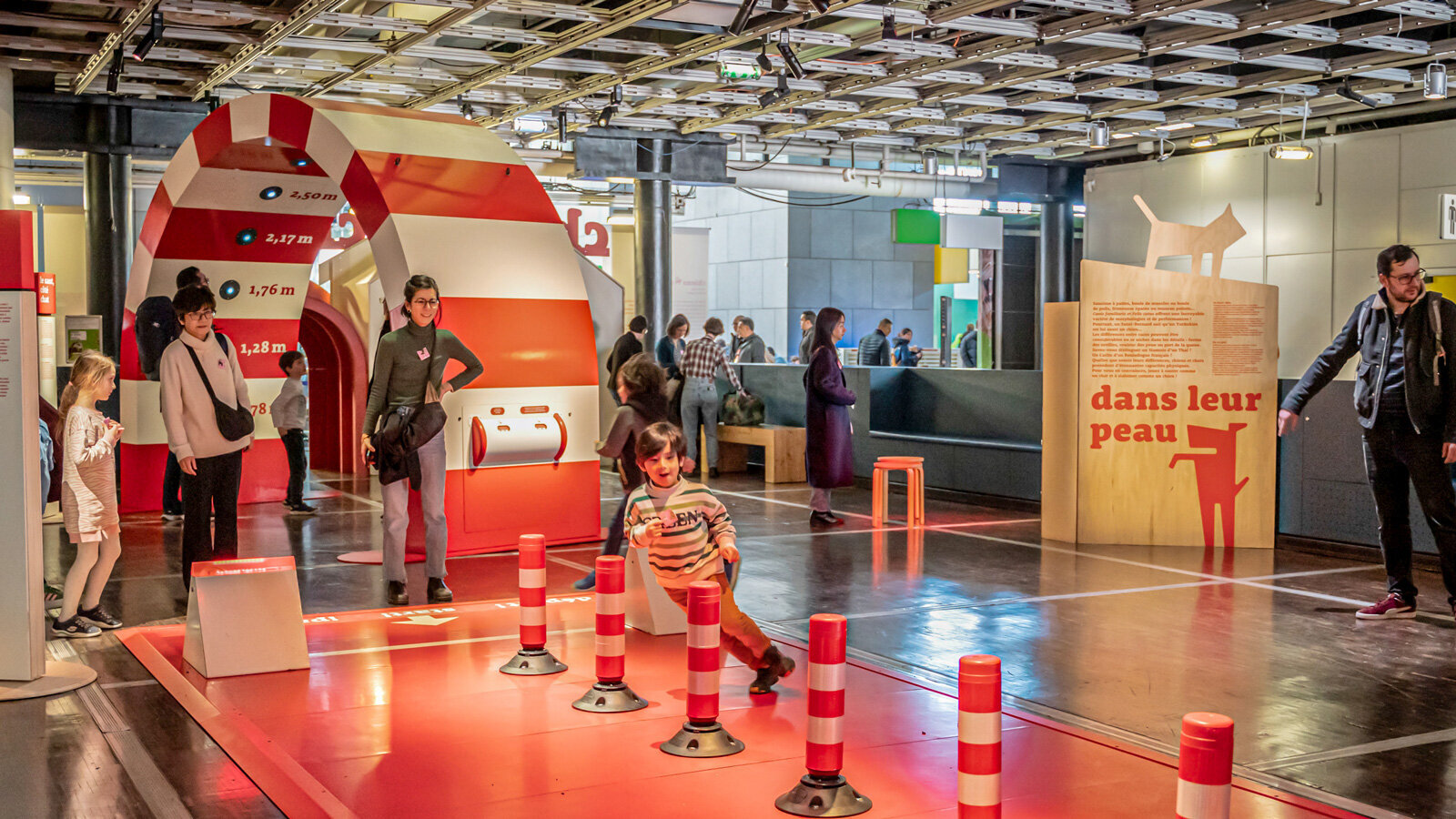
“Chiens et chats” to Cité des sciences
is currently on view at Cite des Sciences et de l'Industrie.
Dogs and Cats
is currently on view at Cite des Sciences et de l'Industrie.

To Dance
is currently on view at Cite des Sciences et de l'Industrie.